Smart City IoT Platform

Smart City

Solution Group

Industry

Building and Construction

PoC Duration

Iotellect Match

2-20 days
↓
AI powered Low Code IoT/IIoT Platform

Enhance urban life by optimizing infrastructure management, public services, environmental sustainability, safety, economic growth, citizen engagement, healthcare, data-driven decision making, resilience, mobility data analytics and real-time monitoring. Design and implement an ad-hoc solution or an own product offering.

Iotellect is a low-code IoT/IIoT platform for developing custom smart city management and monitoring solutions. It enables cities, system integrators, and solution providers to connect traffic systems, smart lighting, meters, environmental sensors, cameras, public transport, parking equipment, and other urban infrastructure in one environment. Teams can create real-time dashboards, maps, alerts, analytics, and automated workflows while integrating existing transportation, utility, building, public safety, and municipal systems.

Build Your IoT Application

Connect Your

Smart City Devices and Data Sources

image
IoT gateways
image
Weather stations
image
Smart meters
image
Sensor grids
for environment, traffic, etc.
image
Cameras and surveillance systems
image
Digital signage devices and interactive kiosks
image
Emergency, service, and public transport vehicles
image
Smart poles and lights
image
Traffic lights controllers
image
Public network devices
(access points, routers, etc.)
image
Public parking equipment
(parking sensors, gates, EV chargers, etc.)
image
3rd party device management and monitoring software

Connectivity & Management

  • Leveraging direct protocol and standard support for diverse connectivity requirements such as IoT (MQTT, CoAP, XMPP, etc), industrial (Modbus, OPC, OPC UA, BACnet, etc.), and structured data exchange (HTTP/HTTPS, JDBC/ODBC, etc.)
  • Low code connection and management for hardware gateways (LPWA, Zigbee, BLE, etc.)
  • Enablement of resilient communication through mesh networks for extended coverage
  • Facilitation of interoperability among different devices and systems to exchange data seamlessly
  • Implementation of robust security measures to protect data and infrastructure from cyber threats

Integration

  • Low code integration with building/facility management systems
  • Low code integration with smart grid management systems
  • Low code integration with smart metering solutions
  • Low code integration with streetlight management systems
  • Low code integration with water and wastewater management systems
  • Low code integration with waste management systems
  • Low code integration with public safety and security systems

Analytics

  • Optimization for allocation of resources, such as energy, water, or transportation, based on real-time data
  • Execution of analytical operations close to the data source (at the edge) to reduce latency and bandwidth usage
  • Prediction of future events and trends based on historical data and current conditions
  • Modelling of different scenarios to assess potential outcomes and make informed decisions
  • Analysis of data based on geographical location to understand spatial patterns and trends
  • Usage of location-based data to optimize service delivery and urban planning
  • Forecasting and management of traffic congestion based on historical and real-time data
  • Anticipation of energy and water consumption patterns to optimize supply and demand
  • Observance of social media data to understand public sentiment and improve citizen engagement
  • Performance monitoring and evaluation for infrastructure, services, and systems
  • Identification of opportunities to streamline processes and improve operational efficiency
  • Detection of abnormal patterns or behaviors that may indicate security threats or risks

UI/UX

  • Fully custom solution-specific UX and pixel-perfect UI matching customer and user expectations
  • Displaying of city infrastructure, device/sensor locations, and real-time data overlays for spatial analysis
  • BI-style presentation of data to facilitate understanding and decision-making
  • Features for citizens to provide feedback, report issues, and participate in surveys
  • "Manager-of-managers" role: integrating third-party applications and systems for data exchange and interoperability
  • Controlling access to features and data based on user roles and permissions

Key Features for Your
Smart City Platform

Customers and Partners

  • System Integrators
  • Original Device Manufacturers
  • Independent Software Vendors
  • Engineering Companies
  • Government Agencies
  • Real-estate Developers

Solution Users and Developers

  • Dedicated low code developers
  • Building automation engineers
  • Urban planning specialists
Customer success team
Community
Online training

Assistance

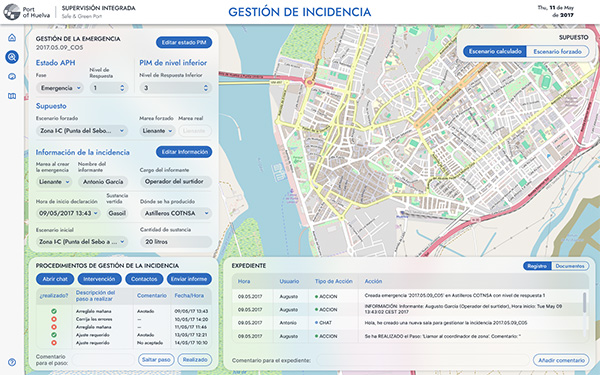
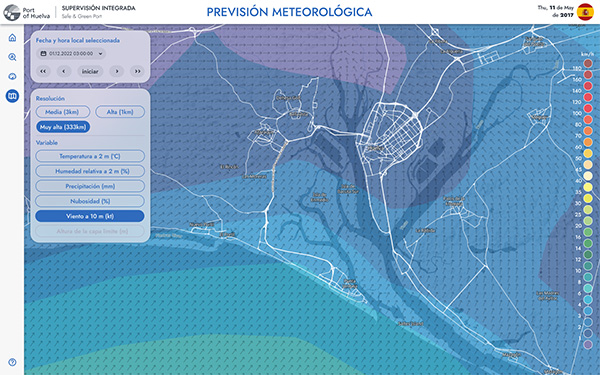
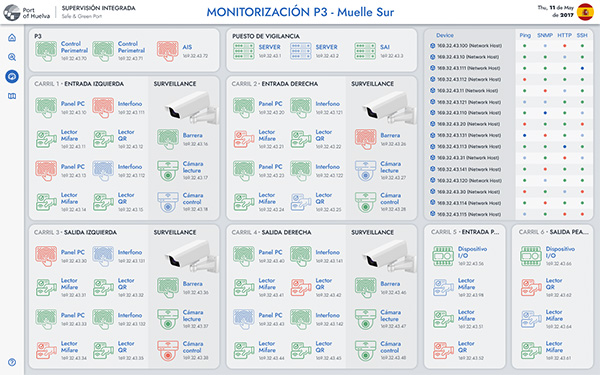
Integrated Sea Port Supervision
Related Case Studies

A unified data management system was built for Huelva Port in Spain using Iotellect's connectors and purpose-built agents.

Customer
Huelva Port
Country
Spain
Industry
Transportation and Logistic
Solution Type
Industrial Automation

Common Questions

What is a smart city IoT platform?

A smart city IoT platform connects urban infrastructure, devices, sensors, and municipal systems in a centralized environment. It enables cities to collect and analyze real-time data, monitor operations, automate processes, and improve transportation, utilities, public safety, environmental monitoring, and other city services.